





Two Unplanned Days of Straight Cleaning What started as a cleaning crashout eventually became an attempt to build an ADHD friendly space that demanded less mental effort from me every morning. Cleaning crashouts happen when my own mess becomes so annoying and frustrating that I act. The combination of external annoyance, internal guilt, and shame […]
Two Unplanned Days of Straight Cleaning
What started as a cleaning crashout eventually became an attempt to build an ADHD friendly space that demanded less mental effort from me every morning. Cleaning crashouts happen when my own mess becomes so annoying and frustrating that I act. The combination of external annoyance, internal guilt, and shame kick-starts the natural inclination to bring order to chaos.
The vision of “the perfect living space” had me upending furniture, decorations, and visualizing a new arrangement. I knew perfection was an untouchable ideal, but I wanted to move towards it. Bending physical reality to my will would cost more time, budget, and interior design work than what I had available. Hell, I can’t even get my videos, blog, or art to look the way I want them to.
Living in a messy world stacks an extra bit of entropy and stress onto every day of existence. My psyche hit a breaking point, and before I knew it, I was unplugging electronics, disassembling furniture, and shuffling everything around. If the room was reorganized, then maybe I could get a clean, fresh restart.


My internal rage acted as a pattern interruption. The conscious mind can ignore much of its own mess. Then messiness becomes white noise in the background, part of the environment. An old notebook becomes raggedy set dressing. The stress stacked like an uncleanable dot damage until I hit a breaking point. At first, I started angrily, aggressively cleaning the room. When I calmed down, I moved in cycles of brash furniture relocation, reflecting on the past, and gently safekeeping timeless trinkets. The value of the bits and bobs is more personal than anything else.
Locked in But Directionless
Nearly four hours had gone by. My bed had become a temporary holding area for sketchbooks, guitars, electronics cables, and memorabilia. The mass of toys and collectables was built up over my entire life. Fallout from my cleaning activity bled into the adjacent room, the hallway, and eventually my bathroom. Deep cleans start to look worse before they look better. Items were moved to allow for dusting, sweeping, and room to shift furniture around.
The general direction and overall concept were clear, but the specifics were fuzzy. Instead of taking the logical approach, I bounced around the house with no guardrails. My thoughts were more a cortisol-filled reaction than deliberate planning.
Take dishes to kitchen>soak them in soapy water>towel reminds me to do laundry>bathroom is on the way back from the laundry room>bedroom oh crap I left a dish here!
Little by little, things began to look more visually appealing. I went from organizing one corner of my world to a section of it. My shirt stuck to the sweat on my back; damn, I thought I’d be done by now. Sweat isn’t the only thing I’d lose today; I would have to part with some of my hard-earned money to get things into order.
Buying New Spaces Means Purchasing Possibilities
Furniture has been on my plan-to-buy list for a long time. A new computer desk, chair, and somehow lofting my queen-sized bed would make my quality of life shoot up a lot. One of the hardest parts about being an adult is deciding what is a need vs what is a want. Things like furniture and organization tools can fall on both sides of want and need at the same time.
Growing up also means getting excited about mundane things like running water, electricity, socks, underwear, and bathroom furniture. Don’t get men talking about their decks and lawns. . . Unsolicited deck pics are a modern problem.
I get oddly excited when looking for life optimization tools. Being able to have more quality time in life is locked behind a paygate. Pay-to-win mechanics have now infected real life too. Apartment or house browsing (lol I can’t afford that) can fill my head with dumb dreams and ideals. When I imagine living in a new home, it’s filled with a lift in the garage, a Japanese bath, and friends and family. I think I see it as a gargantuan leap in quality. In reality, the only time I was depressed because of an apartment is when it was almost laughably small.
With a new medicine cabinet, toilet paper holder, and tiered towel rack, my life will mostly be the same.
Jekyll and Hyde Shopping With AuDHD


I take two completely different personalities with me when I go shopping.
When autism is in the driver’s seat, shopping becomes a research problem. Electronics, cars, tools, and hobby equipment get spreadsheet’s worth of mental filtering before I even leave the house. I usually know what features matter, what I’m willing to sacrifice, and roughly what I should be paying.
My most recent monitor purchase was like that. I already had a gaming display, so I wasn’t chasing refresh rates or response times. This time I cared more about color accuracy, contrast, and image quality for editing. I still wanted value, though. I rarely buy the most expensive option unless the premium actually gives me something meaningful.
I ended up with a refurbished 27-inch ASUS ProArt.

Then there’s ADHD shopping.
Every Aisle
ADHD does not believe in surgical strikes.
Target, Walmart, Fred Meyer, and Costco can turn into two-hour expeditions because novelty keeps pulling me toward the next aisle. Instead of walking in with a specific product in mind, sometimes I only have a vague feeling:
I’ll know it when I see it.
I move through the store like a combine through a field.
That version of shopping is less efficient, but it feeds a different part of my brain. Clothes, furniture, and home goods become raw material for ideas. I start mentally mixing layouts, colors, aesthetics, and future purchases.
A Pinterest board might give me a starting point, but after that I’m mostly operating on vibes, curiosity, desire, and cost.
Guess What Side Spends More Resources
I showed up to Target with one thing on my mind.
I need to be more orderly and neat.
All these years, the home improvement section in stores was invisible to me. Now I’m taking a more active role in my home. The backroom-esque fluorescent white rows of lights and furniture helped me to visualize configurations for my room. Target is nice because it’s not dirt-cheap goods like Walmart. It’s also not a dedicated furniture store like Seldon’s. Anywhere a guy in a suit greets me to buy a couch or a computer chair would be too expensive for me. Target offered me the perfect Goldilocks middle-priced balance of cost vs. quality.
I gravitated towards the BrightRoom brand for their cost-effective, minimalist, Asian-inspired, open-concept design.
The name BrightRoom made me feel like my room and my future were heading towards a lighter direction.
How ADHD Affects the Way I Organize My Space
I didn’t react to the news very well when I was diagnosed with Autism. I flat-out denied that I was on the Spectrum. My ADHD diagnosis came as relief. I realize that these conditions aren’t death sentences. With the conditions on paper, I could work with and around the symptoms. If I wanted to stay organized, investing in research, materials, and time to execute these strategies wasn’t optional for me.
To stay organized with ADHD, I needed to buy open-faced organizers or clear containers. I needed a constant reminder of where things are via clear doors or a label. Just as I was building my sense of home, I needed to establish a place to put them back when done. Despite having ADHD, my dad taught me to always return video games to the correct case when finished.
Four Hundred Dollars
I was so shocked when the register clocked in at nearly five hundred dollars. How could buying boring, mundane things be so expensive? Aren’t houses alone expensive enough? Maintenance fees and taxes would eat me if I could even afford a house. And now the things we put inside of them are expensive as well? I looked down at my cart, disappointed there wasn’t an expensive electronic item inside. A Toilet Ladder Rack and Tall Bathroom Storage Closet stared at me instead of an Xbox. Sprinkled around the two pieces of furniture were space-saving hangers, wall hooks, and other small but meaningful containers.
Japanese Goods and Homesickness
Still lacking some additional clear plastic boxes, containers, and organizers, I headed to Daiso. Daiso would allow me to supplement the mid-grade items with cheaper goods that wouldn’t break the bank. The Japanese goods store also quelled my homesickness for Japan a bit. Every small branded item, the snacks, and the items and products that I had used in my day-to-day life abroad.


When I saw a smiley-faced sponge similar to the one I had used to wash my single bowl in my first year overseas, some black ice melted off my heart. The warm internal feeling was followed by memories of going with my friend to the Daiso in Matsumoto. How peculiar it must have been to see a foreigner with 10 or so Daiso bags wrapped around his arms as he carried them nearly 20 minutes home.
The Small Smile Helps
Japan’s notorious infatuation with kawaii culture is partly due to the warm feeling it grants. When times are hard, even a simple gesture like a small smile can turn the tide in your day. Even if the smile is from an anime character, the old lady at Delicia who watched me buy discount tonkatsu after the daily discount sticker, or from your sponge, it makes life lighter. It’s like the lite version of having a dog greet you after a long day. The smile won’t solve existentialism, but it will make you feel better about it. I bought that sponge because maybe I needed another smile to brighten up day-to-day existence too.
The Sum is Greater Than Its Parts
A cliché . . . Wow, this writer stinks. Because of my laziness, the bathroom was an easier pill to swallow (Another cliché… can this guy write anything original). My inner 40-year-old (see you soon, buddy) was excited to build my new functional purchases. After a quick spiff and shine, I parted ways with the old bathroom mats.
With the room a little less chaotic, it was time to start the build. The picture on the box made the wooden pressboard and the thin metal beams look like different products. It was better than the wire mesh version at Walmart, but I wasn’t confident that the disconnected mass of parts in front of me wouldn’t break in a matter of months. I’m glad I didn’t go for the absolutely cheapest item.
I changed my mind completely when my new toilet rack was assembled. Not only did I have the joy of “building it myself,” but the little mid-budget thing punched above its weight if you didn’t inspect it too closely. It was like when a middle-class person like myself dresses up to go to networking events. None of the brands I wore were expensive, but they looked nice from a couple of feet away. . . ganbare, middle-class furniture!
The drywall anchors and screws made the budget materials feel incredibly sturdy. Well, I hope I’ll like it where it is in a couple of weeks, because it’s not like I can move it. Adding new drywall isn’t that hard. . . right? I couldn’t help but smile when the disorganized mess on top of my bathroom counter transformed into a clean, orderly space.
Multi-Day Process


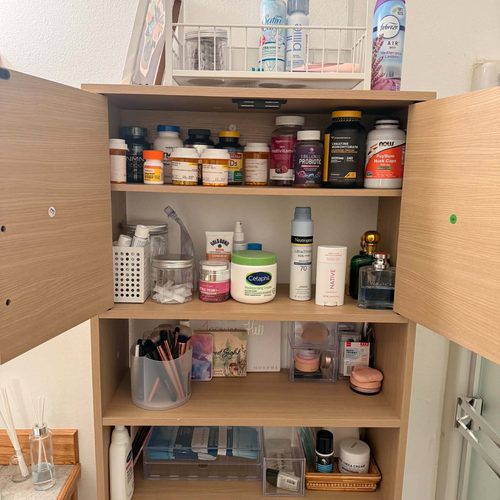
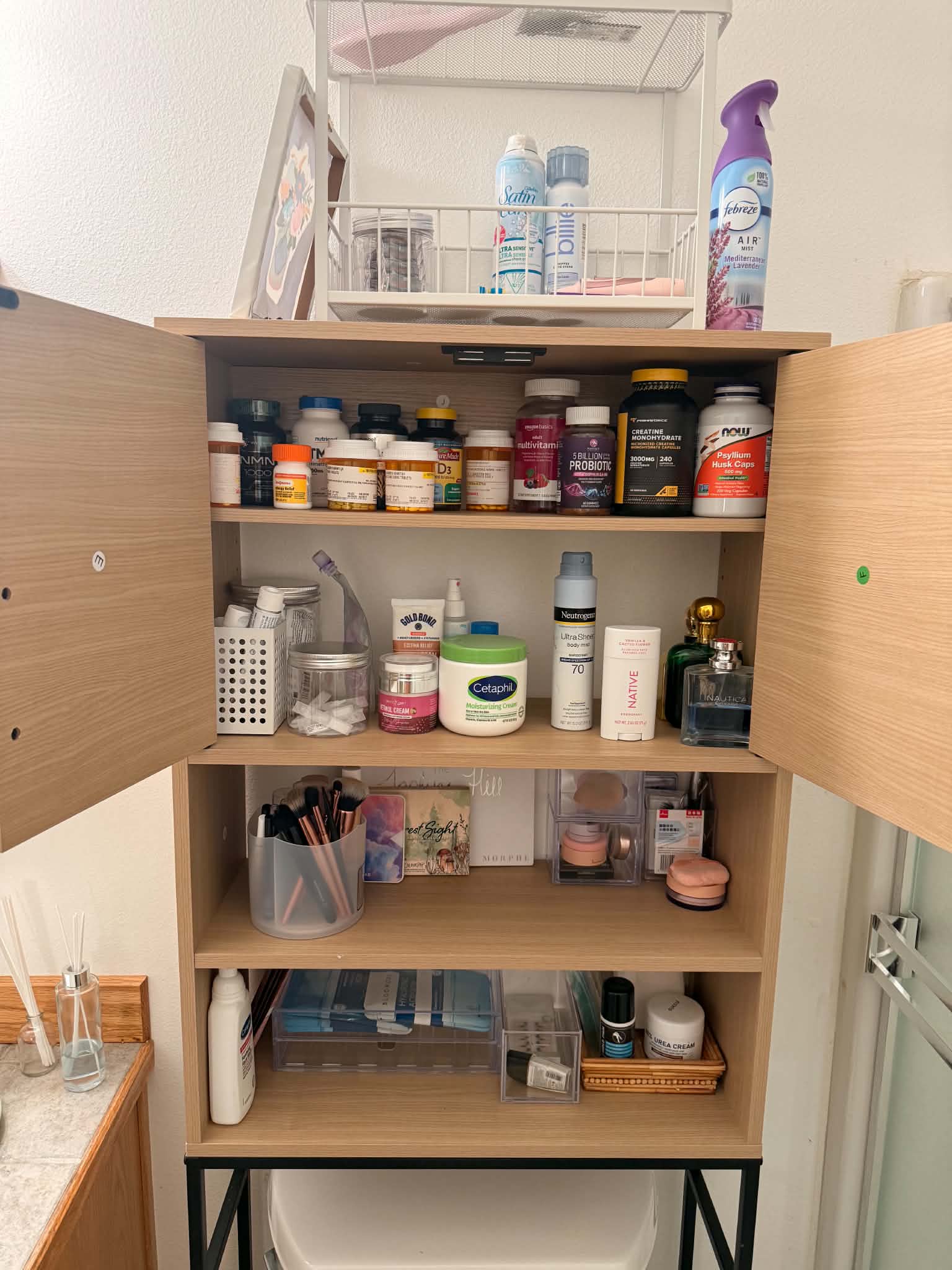
I can work until nearly three in the morning if I’m focused enough. That’s the great part about being neurodivergent. After passing out for five hours, I woke up the next day to do the same thing. The tower cabinet took me four hours to put together. The aesthetically matching cabinet worked to balance the bulk on the other side of the bathroom. It looked great, but I didn’t know what to put in it.
The instructions don’t tell you what to put in it when the furniture is all together. I had to resist the urge to just stuff random items inside and close the door.
The single-minded focus, effort, and building had turned me into a tired, disheveled, salty mess. It didn’t help that I was irritated as well. Grody and caked in sweat, I sat to admire my work. It had taken nearly two and a half calendar days, a crash out, and time and investment to organize just a bathroom. . . It’s not perfect, but it will do.
Building an ADHD Friendly Space Was Worth It
My new setup was ADHD-friendly. How would an F1 pit lane set up supplies and tools? I don’t think I’d ever be in an open-wheeled car in a pit stop, but imagination can turn the daily shower into one. I targeted removing crossing pathways, overlap, and back-and-forth movement between stations.
Ideally, I’d be able to stand in the same spot or strafe from left to right to get everything I needed in the morning. Before the organization runs, things were just scattered. There weren’t stations or designated places for items; it was just cluttered. Time to take the new setup for a calibration run. Creating an ADHD friendly space meant giving frequently used items obvious, visible homes.
Shower
As the hot water streamed down my head, I could finally just exist. Normally, when I showered, there was a micro-anxiety. Although I got my steps in walking back and forth between my bathroom and bedroom trying to find where things were. It felt almost lazy to open my eyes and see soap, cleanser, shampoo, and conditioner within arm’s reach. What else did a bathroom need?
The shower caddy gave me an easily visible, established spot. Everything had somewhere to belong; maybe I could find my place too? The new supplement routine I started made my bathroom a claustrophobic mess of branded bottles. Now every supplement was neatly tucked above the toilet. The biggest benefit of an ADHD friendly space wasn’t that the bathroom looked better; it was that using it required less thought.
Nearly $500 is a steep price to pay, but reducing mental stress and overhead every morning has to count for something. Maybe each morning was only a tenth or two faster. But over the course of a life, those small gains—and the reduced stress that came with them—had to count for something.
. . . I still miss the Japanese bathhouses, though.
Much love,
LBM